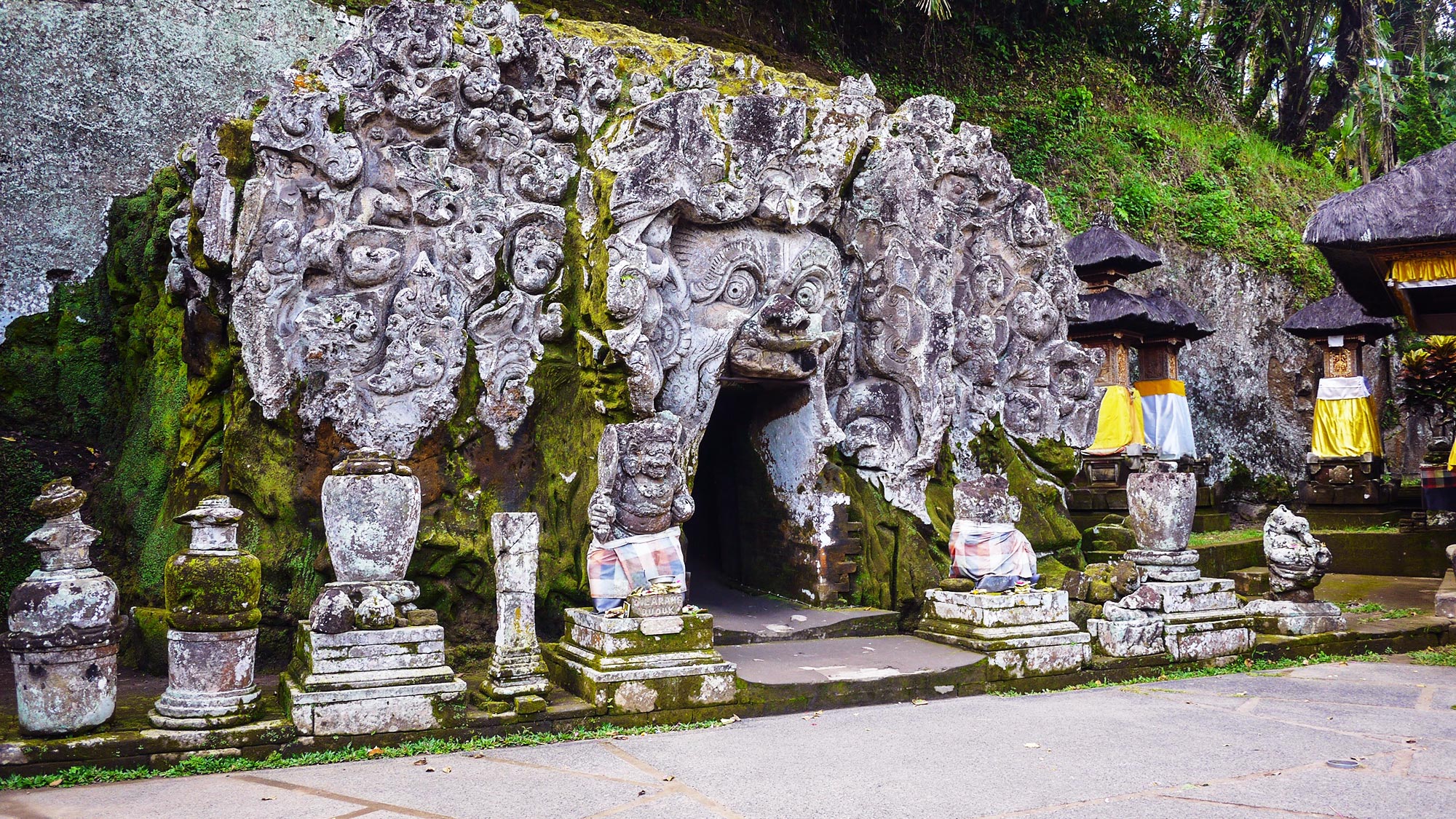
Goa Gajah — the Elephant Cave — was cut in the ninth century as a spiritual sanctuary, and it remains one of the most important archaeological sites in Bali. It sits in Bedulu village, ten minutes from central Ubud and about fifteen from Natya Resort Ubud.
The entrance is the image everyone knows: a stone doorway carved with demonic faces and mythical creatures, set there to keep evil out. Inside is a small chamber holding stone idols of Shiva and Ganesha, with meditation niches used by priests centuries ago. Outside, restored bathing pools fed by stone fountains are believed to purify anyone who uses them.
What makes Goa Gajah unusual is what stands alongside the Hindu shrines. Buddhist stupas and relics share the same grounds, a record of the two traditions coexisting in Bali’s early history rather than displacing one another.
The gardens around the site are quiet and green, and the paths through them make the whole visit feel unhurried. Dress modestly, take your time, and pair it with the rice terraces or the Monkey Forest for a full Ubud day.